Signs of Carpenter Ants
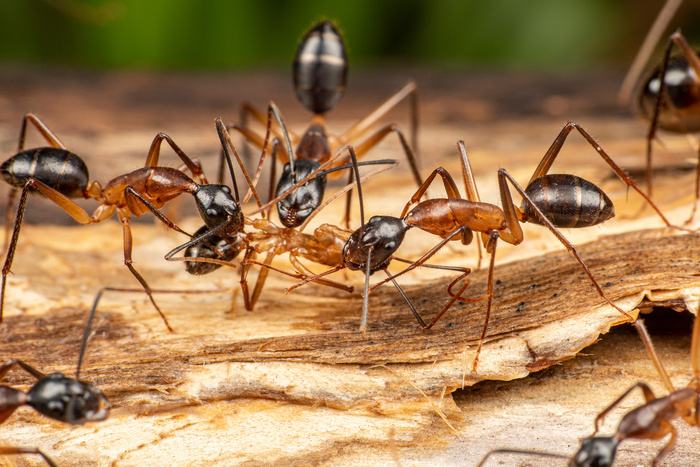
- Large black ants indoors, especially near moisture
- Piles of coarse sawdust (frass) below woodwork
- Faint rustling sounds inside walls
- Winged ants emerging indoors in spring
- Wood that sounds hollow when tapped
How We Handle It
Killing the foragers you see barely dents a carpenter ant colony. Our technicians track the ants back to their nesting sites, often in damp or damaged wood, and treat the colony directly. We then address the moisture and entry conditions that invited them, protecting the integrity of your home or business.
Common Questions
Carpenter Ant Control FAQs
Look for large black ants indoors, especially near moisture, piles of coarse sawdust below woodwork, faint rustling inside walls, or wood that sounds hollow when tapped. Any one of these signs points to carpenter ants nesting in wood. A Ringdahl technician can confirm the pest during a free on-site consultation and check damp or damaged wood where colonies usually hide.
Spraying the ants you see rarely solves the problem, because killing foragers barely dents the colony behind them. Ringdahl technicians track the ants back to their nesting sites, often in damp or damaged wood, and treat the colony directly. We then address the moisture and entry conditions that invited the ants, which protects the structure of your home or business.
Yes. Carpenter ants excavate wood to build their nests, and left alone they can do serious structural damage over time. The risk grows when nests sit in damp or damaged wood inside walls and framing. Treating the colony early, and fixing the moisture conditions that attract them, is the practical way to protect the integrity of your home.
A technician inspects the areas where carpenter ants are active, looking for nesting sites, moisture, and the entry points the ants are using. You get a plain explanation of what was found and a firm price before any work begins. Request a free quote online or call (561) 737-6413 to schedule your free on-site consultation.